
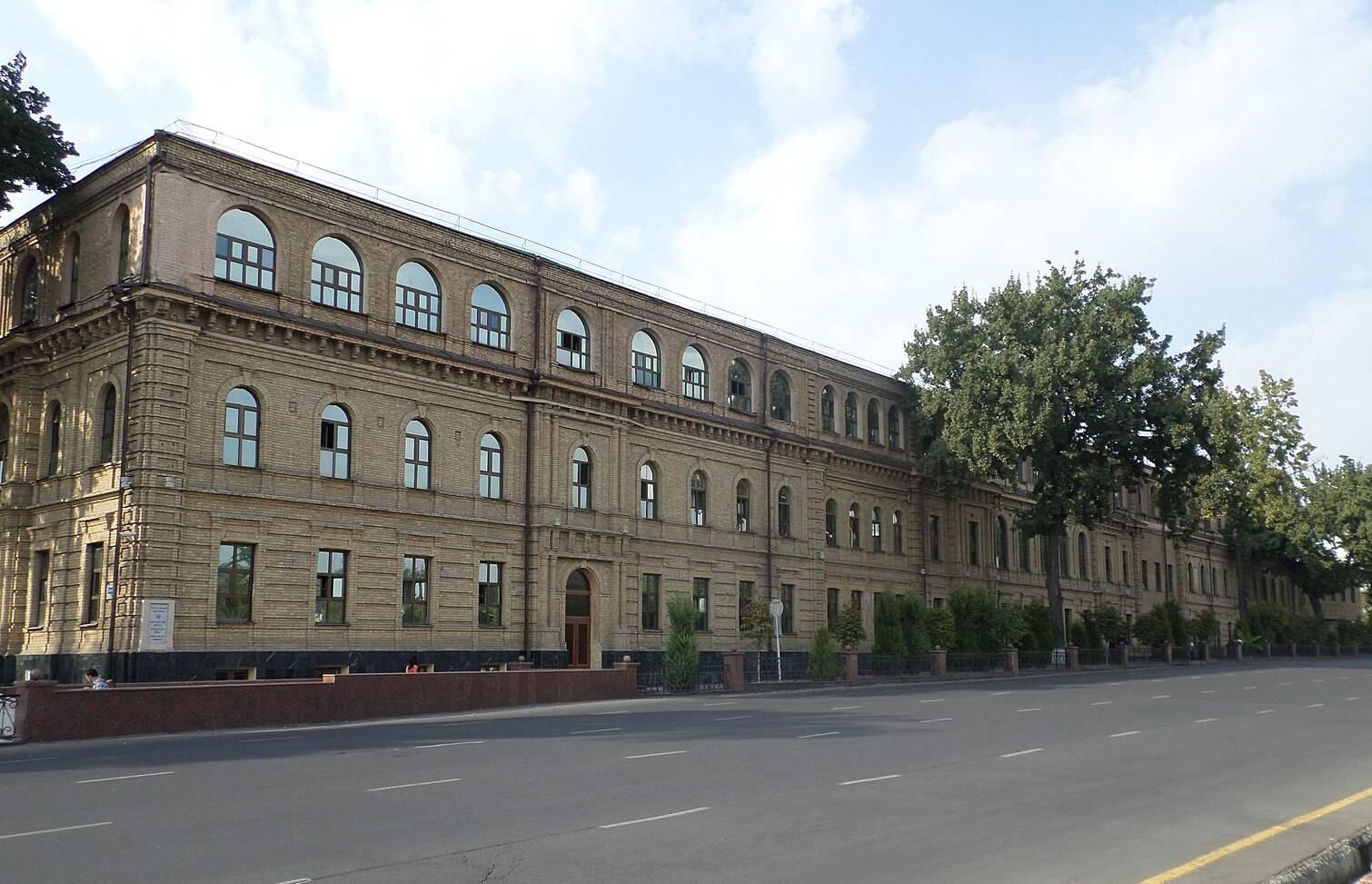
These two buildings, designed by military engineer Stanislav Kazimirovich Glinka-Yanchevsky, are well-known to Tashkent residents. Their beautiful brickwork, characteristic of pre-revolutionary Turkestan architecture, draws attention. The buildings are separated by Broadway, the local nickname for the current Sayilgoh Street, formerly Karl Marx Street, and earlier still, Sobornaya Street.
Before
the revolution, the buildings housed gymnasiums: the one on the right, built in
1878, was a boys’ gymnasium, while the one on the left, constructed in 1879,
was a girls’ gymnasium. Each gymnasium consisted of an ensemble of three
separate structures connected by a gallery. However, in 1906, the spaces
between them were filled in according to a design by architect G. M.
Svarichevsky, making them appear as single, cohesive buildings. The most famous
alumnus of the gymnasium was A. F. Kerensky, who later became the Chairman of
the Russian Provisional Government.
After
the revolution, the buildings housed the Central Asian State University. In the
1930s, a third floor was added to both buildings, preserving their
architectural style. As the university expanded, some faculties—such as
chemistry and geology—moved to separate buildings. The biology and soil science
faculty remained in the right building the longest, but after the opening of a
new university campus, nearly all faculties relocated. The gymnasium buildings
then housed the Automotive Institute and the law faculty of what was then
Tashkent State University, now the National University of Uzbekistan. Today,
they are home to the Tashkent State Law University.
The
buildings frame Amir Temur Square from the west, where this side of the roughly
circular square is a straight line. All monuments that have stood on the square
over time, including the current monument to Amir Temur, face west. Thus, their
gaze is directed toward these beautiful historic gymnasium buildings, which,
along with a few other surviving structures, serve as a testament to Turkestan
architecture.
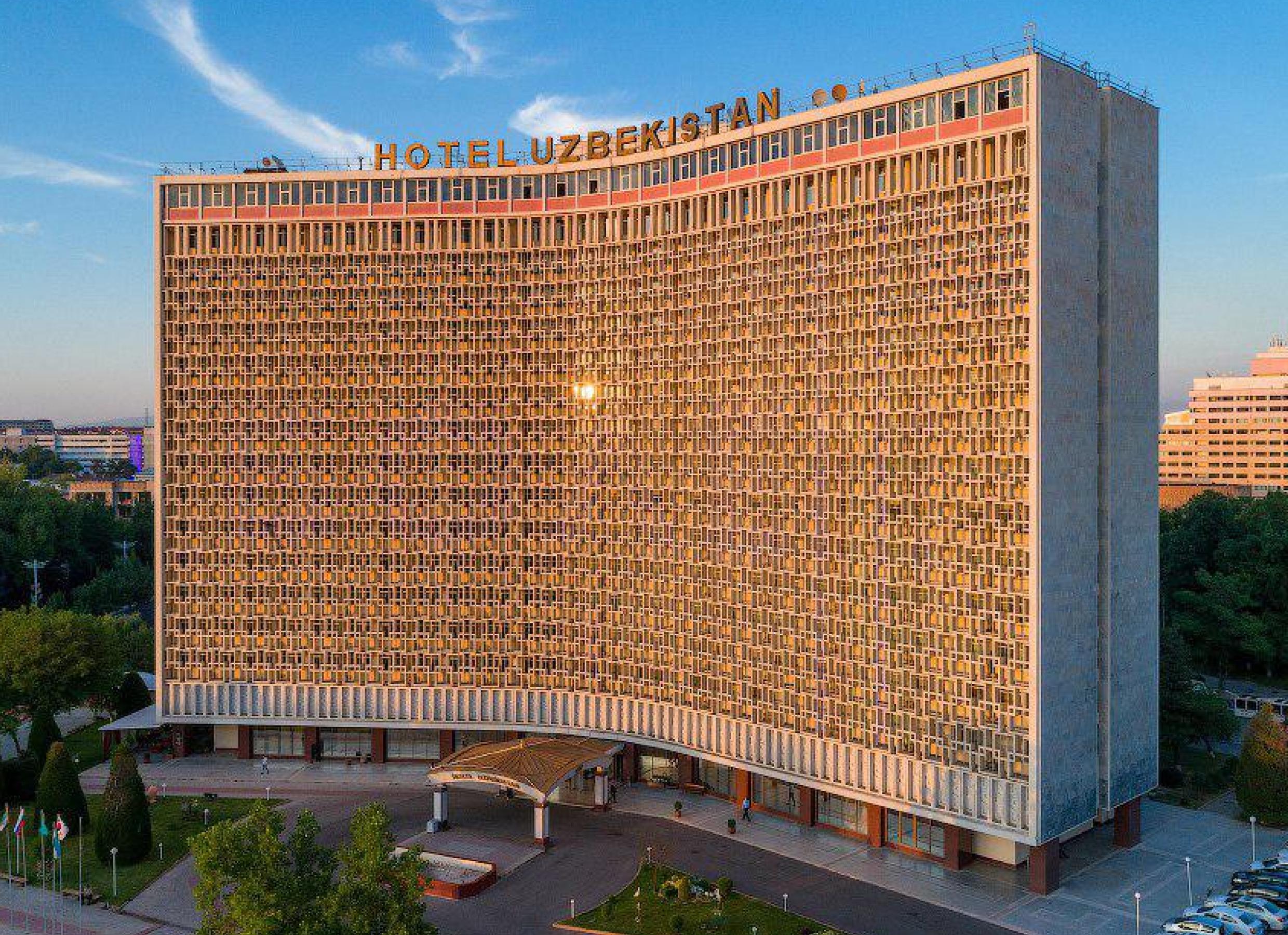
The 17-story “Uzbekistan” Hotel is one of the capital’s most recognizable symbols. Located in the v...
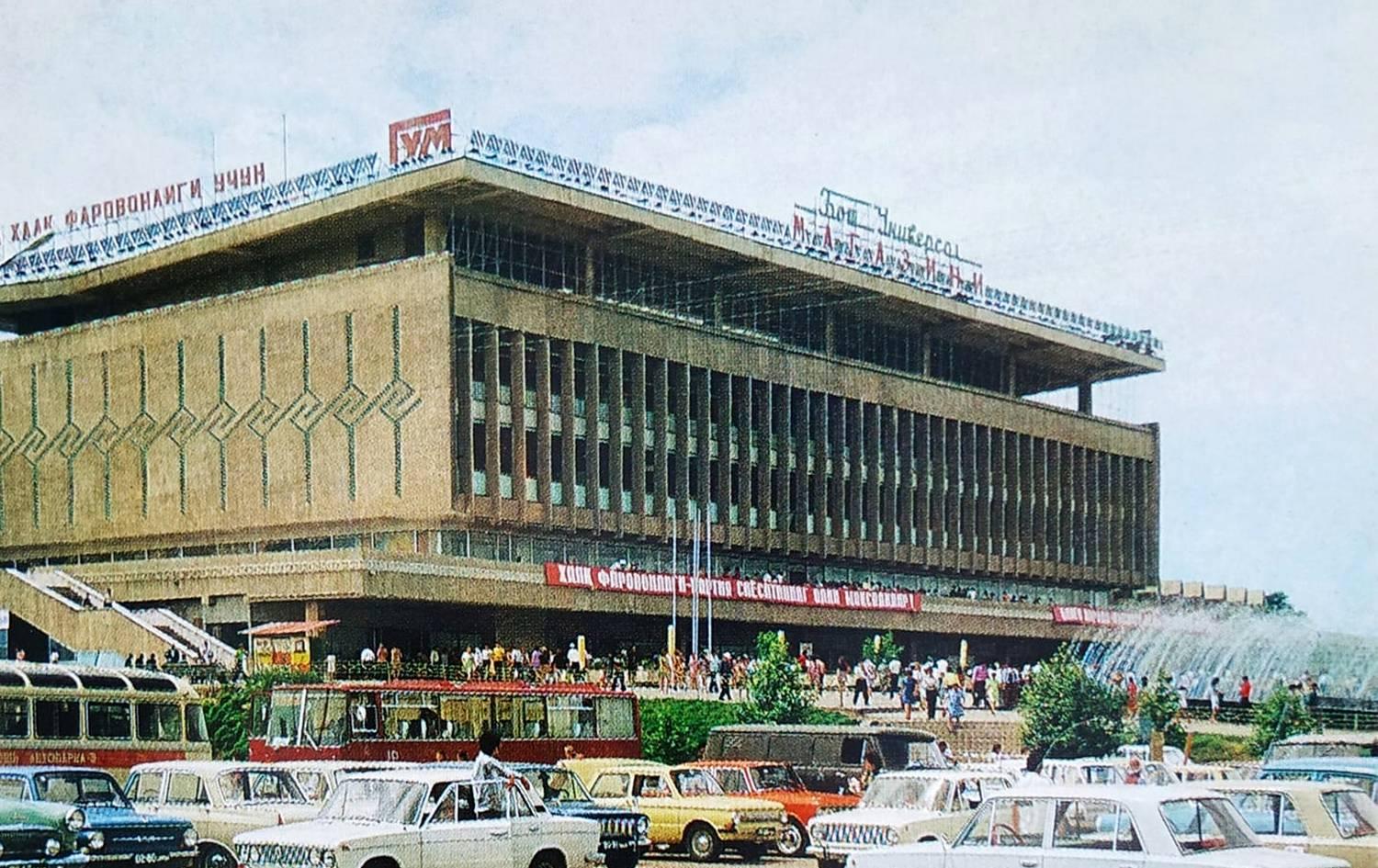
Opened in 1972, the Main Department Store (GUM) is an exemplary combination of functionality and m...
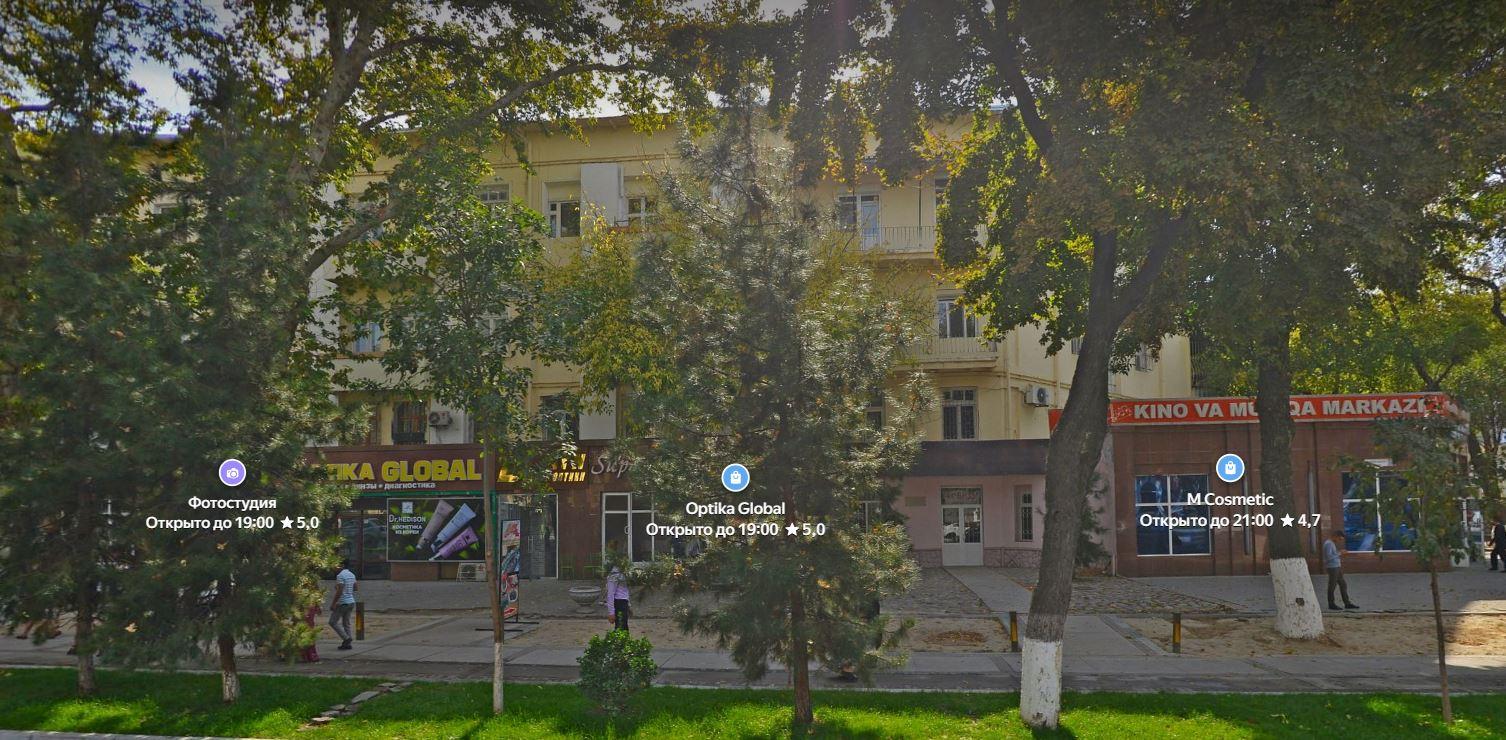
Mutaxassislar uyi Narkomzem loyihasi bo‘yicha 1938 yilda me’mor Pavlov loyihasi asosida qurilgan v...
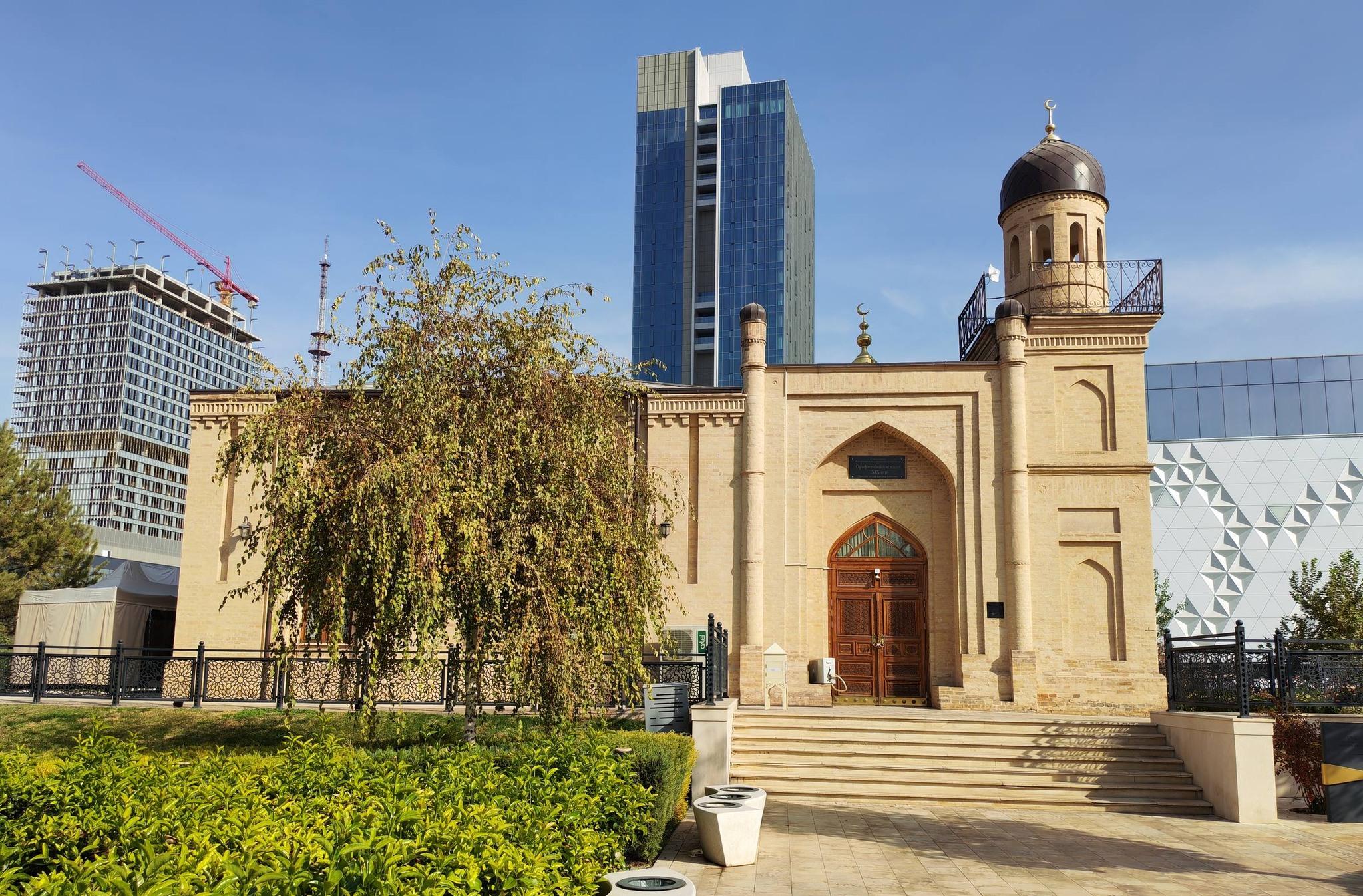
The mosque, striking with its unusual lines, is located within Tashkent City Park. This distinctive...