
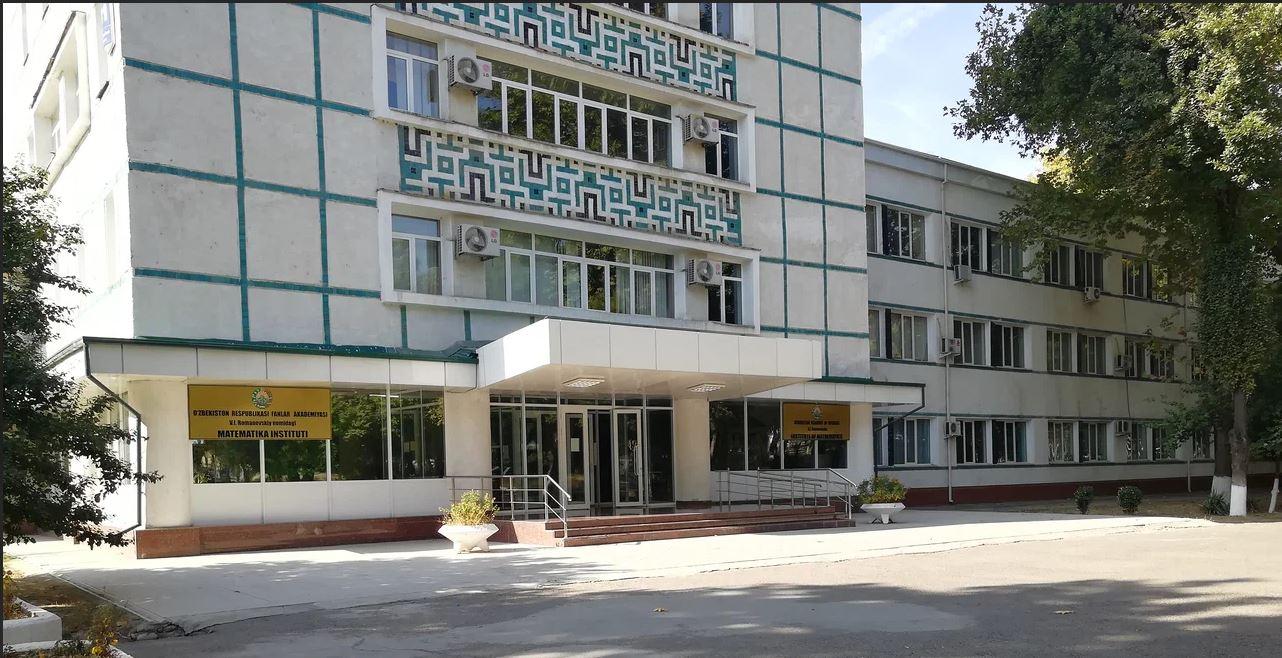
The building of the National Centre of Archaeology (previously known as the Institute of Oriental Manuscripts and later as the Institute of Oriental Studies) was constructed in 1968 in the newly developing Akademgorodok in the north-east of Tashkent.
Architects: L. Karash and V. Sutyagin; engineers: I.
Shakhsuvarov, Ye. Chernyshov, and G. Kalinina.
The austere seven-storey structure has been and
remains the most prominent landmark at the intersection of Mirzo Ulugbek Avenue
and Darmon Yuli Street. The brutalist concrete block is decorated with
fragments of non-national ornamentation. The fifth and sixth floors, which
house the manuscript archive, have no windows at all — this enhances the feeling
of functional minimalism.
To the right of the high-rise section, along Mirzo
Ulugbek Park, stands a strict three-storey wing with sun-shading structures on
the courtyard side. Its exterior was recently clad in alucobond, which has
diminished its value as a modernist monument.
On the left side of the main building is an attached
conference hall decorated with a concrete panjaroy lattice.
In the vestibule, a wall painting by Chingiz Akhmarov
has been preserved, though it is in need of restoration.
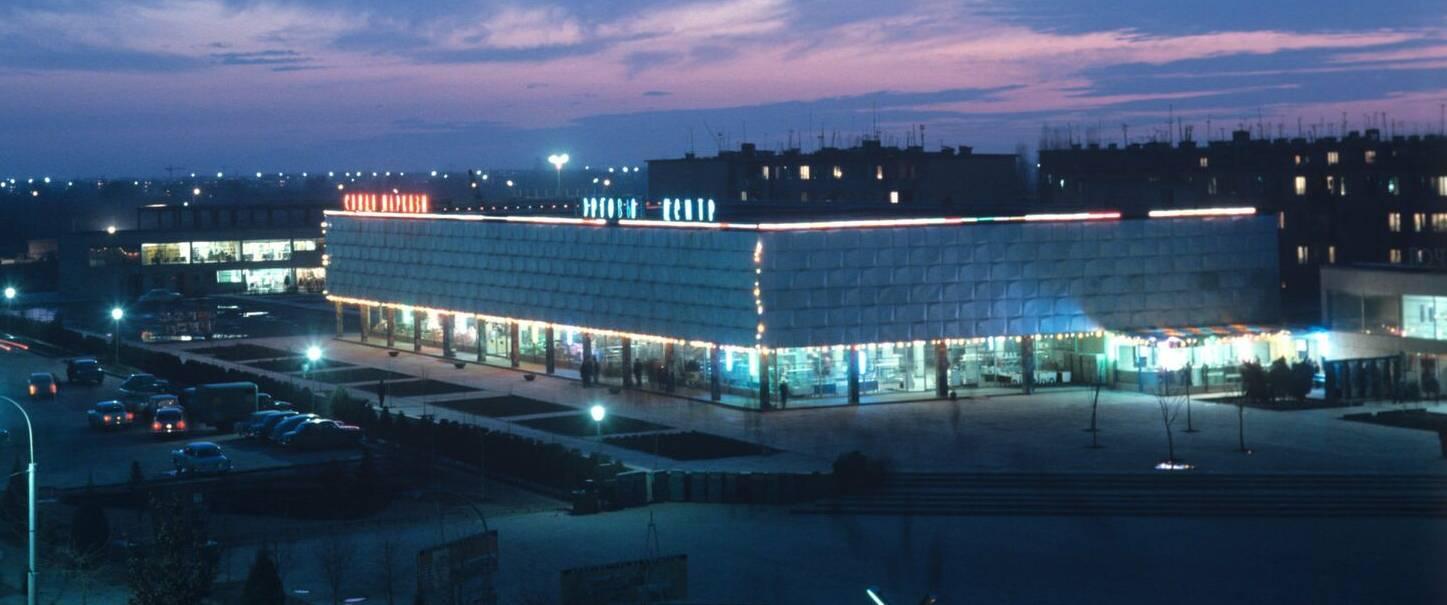
The shopping centre is the most famous and iconic place in Chilanzar. It opened in 1964 to mark the...
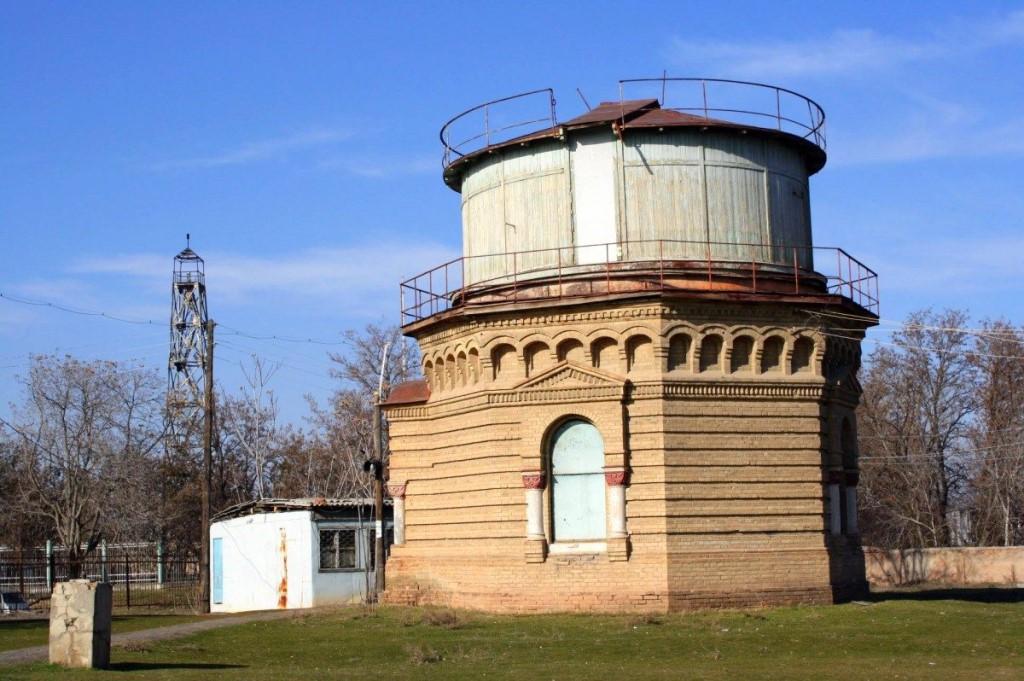
In 1870, the military leadership of Tashkent decided to build an observatory. In 1872, a suitable ...
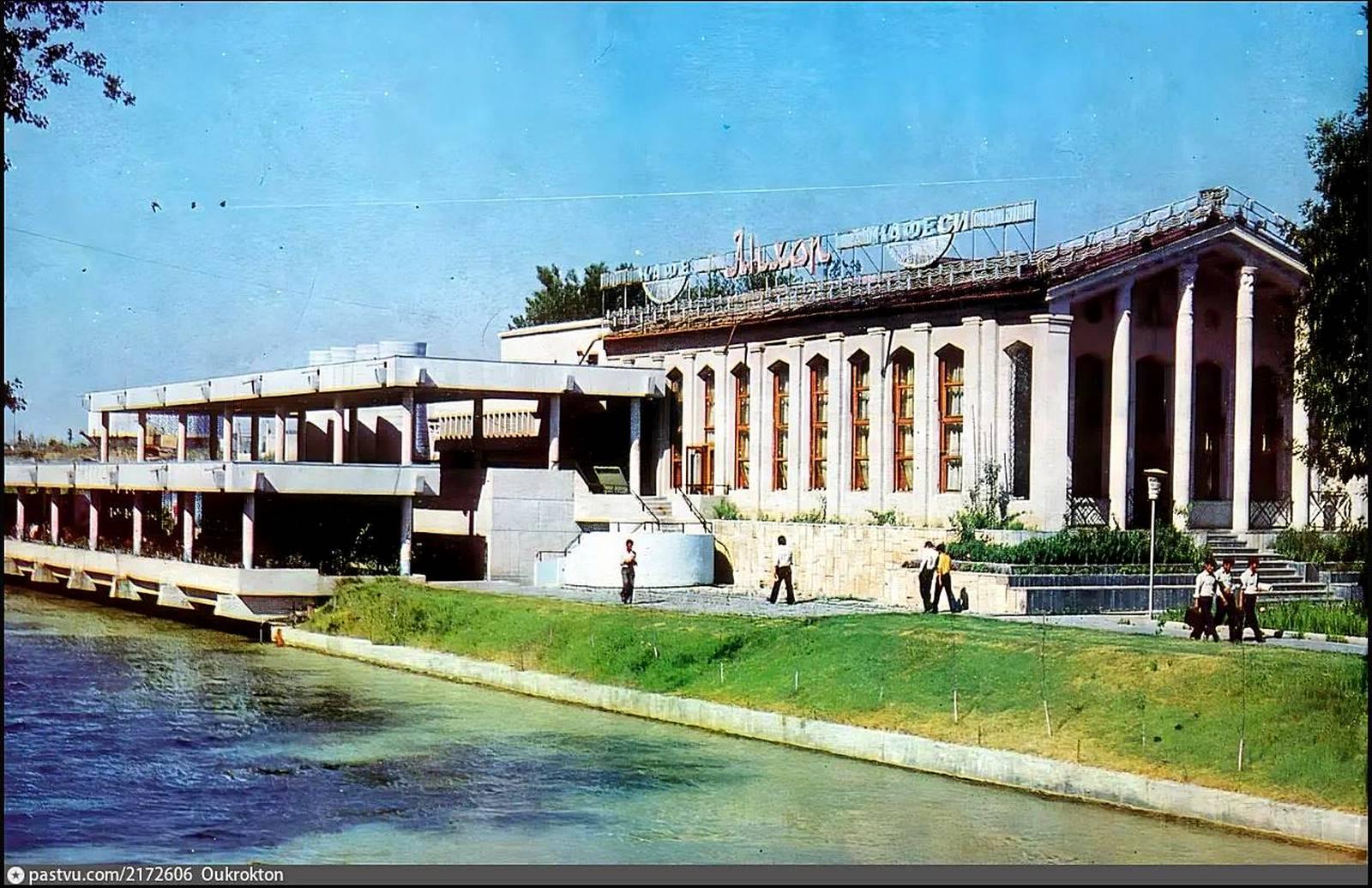
The teahouse on the Anhor canal bank was built in 1956 according to the design of architect V. M. D...
The beautiful large building on Navoi Avenue was built in 1940 according to the design of architect...